
How AI is changing the way healthcare organisations learn from incidents, understand risk and strengthen patient safety
Healthcare organisations have made significant progress in incident reporting. Paper forms and spreadsheets have increasingly given way to digital systems that make reporting easier, workflows more structured, and investigation, corrective-action tracking, notifications and audit trails more manageable.
Digitalisation has created a stronger foundation for patient safety. But it also raises an important question: are healthcare organisations getting better at learning from the incidents they report?
An organisation may hold thousands of historical incident reports containing valuable knowledge about what happened, contributing factors, recurring problems, actions taken and possible signals of emerging risk. Yet much of that knowledge can remain fragmented across individual cases or buried within narrative information.
In a conversation between Hak Yek Tan, Founder & CEO of QUASR+, and Vinoth Jayaprakasam, VP Product Engineering, they explored what comes after digital incident reporting, how AI could change incident management, what Incident Intelligence means in practice, and why responsible adoption matters.
Here are seven key insights from that conversation.
1. Digital incident reporting is the foundation, not the destination
Digitalisation has solved many important problems. It has made reporting more accessible and consistent, standardised workflows, automated notifications and escalation, and strengthened investigation, action tracking, audit trails and compliance reporting. It has not failed; it has created the foundation for the next stage of incident management.
The challenge changes as organisations become better at reporting. They accumulate thousands of incident descriptions, investigation findings and corrective actions, creating more information than people can continuously read, interpret and connect. The question therefore shifts from “How do we collect and manage incident information?” to “How do we learn from all the information we have collected?”
Vinoth: “We’ve moved from a data collection problem to an information interpretation problem.”
This does not diminish the importance of digital incident reporting. Rather, it suggests that digitalisation is a necessary foundation upon which better analysis, organisational learning and ultimately Incident Intelligence can be built.
2. Some of the richest safety information is hidden in narrative data
Incident systems contain both structured and unstructured information. Structured fields – such as incident type, date, location, department, severity and risk rating – are relatively easy to analyse using conventional reporting and dashboards.
Narrative information is different. Incident descriptions, investigation notes, contributing factors and findings tell the story of what happened, and this is often where some of the richest safety information sits.
A dashboard might show the number of falls, medication incidents or communication events. But incidents classified differently may still share an underlying problem. Several apparently unrelated events, for example, could involve communication failures during shift handovers. A safety professional reading those reports might recognise the connection, while conventional analytics based on classifications and predefined fields may not.
Vinoth: “AI gives us another capability: analysing meaning and context, not just fields and categories.”
This ability to work with narrative information is significant because it potentially makes much more of an organisation’s accumulated incident knowledge accessible for analysis.
3. The bigger opportunity for AI is learning, not simply efficiency
AI can potentially support multiple stages of incident management. It can summarise lengthy reports, highlight important information, assist with initial assessment, organise investigation information, construct timelines, identify possible contributing factors and help locate similar historical incidents. Semantic search can also allow users to find relevant incidents based on meaning rather than relying solely on exact keywords or classifications.
These capabilities can save time and reduce administrative workload. But the larger opportunity is what happens when AI helps people bring previous organisational experience into a current investigation. An investigator could potentially see similar historical incidents, recurring contributing factors and corrective actions that have been tried before.
Hak: “Now we’re not just processing an incident faster. We’re bringing the organisation’s accumulated experience into the investigation.”
This changes the value proposition of AI. Efficiency matters, but the more strategic opportunity is to help healthcare organisations learn faster and make better-informed decisions from the information they already possess.
4. Incident Intelligence means understanding what incidents are telling us collectively
Traditional incident management is predominantly centred on individual cases. An incident is reported, reviewed, investigated, acted upon and eventually closed. These processes remain essential, but they do not necessarily reveal what is happening across hundreds or thousands of incidents.
Incident Intelligence introduces a different level of questioning:
Vinoth: “Incident Reporting: What happened?
Incident Management: What are we doing about it?
Incident Analysis: Why did it happen?
Incident Intelligence: What is our collective incident data telling us about risk?”
Consider several medication incidents occurring across different wards. Individually, none may appear especially significant, and they may even be classified differently. Looking across them, however, could reveal that several occur around shift changes, that communication or handover issues repeatedly appear in the narratives, or that a common workflow weakness exists across multiple departments.
Connecting incidents also allows learning to travel across an organisation. Without that connection, the same underlying problem may appear months later in another department and be treated as an entirely new event.
Hak: “Incident Intelligence helps connect those experiences across time, teams and locations. That’s how fragmented incident records begin to become organisational memory.”
That shift – from understanding incidents individually to understanding what they reveal collectively – is at the heart of Incident Intelligence.
5. AI should surface signals, not make patient-safety decisions
AI’s ability to identify relationships does not mean every relationship it identifies is correct or causal. If several incidents appear to share a handover-related factor, that should be treated as a signal for further investigation, not as proof that handover caused those incidents.
Vinoth: “AI should surface signals and possible relationships, not declare every correlation to be a confirmed cause.”
The same principle applies throughout the incident-management lifecycle. AI may provide an assessment or recommendation and present the information supporting it, but an authorised professional should make decisions requiring professional judgement. For example, AI might help a Quality Manager identify which cases among a large queue appear to require urgent attention, without independently determining the final severity of those incidents.
This establishes an important boundary for healthcare AI: the objective is not to remove people from decision-making, but to give them better access to relevant information and insights.
Hak: “AI should support professional judgement – not replace it.”
6. Trust in healthcare AI has to be engineered, validated and governed
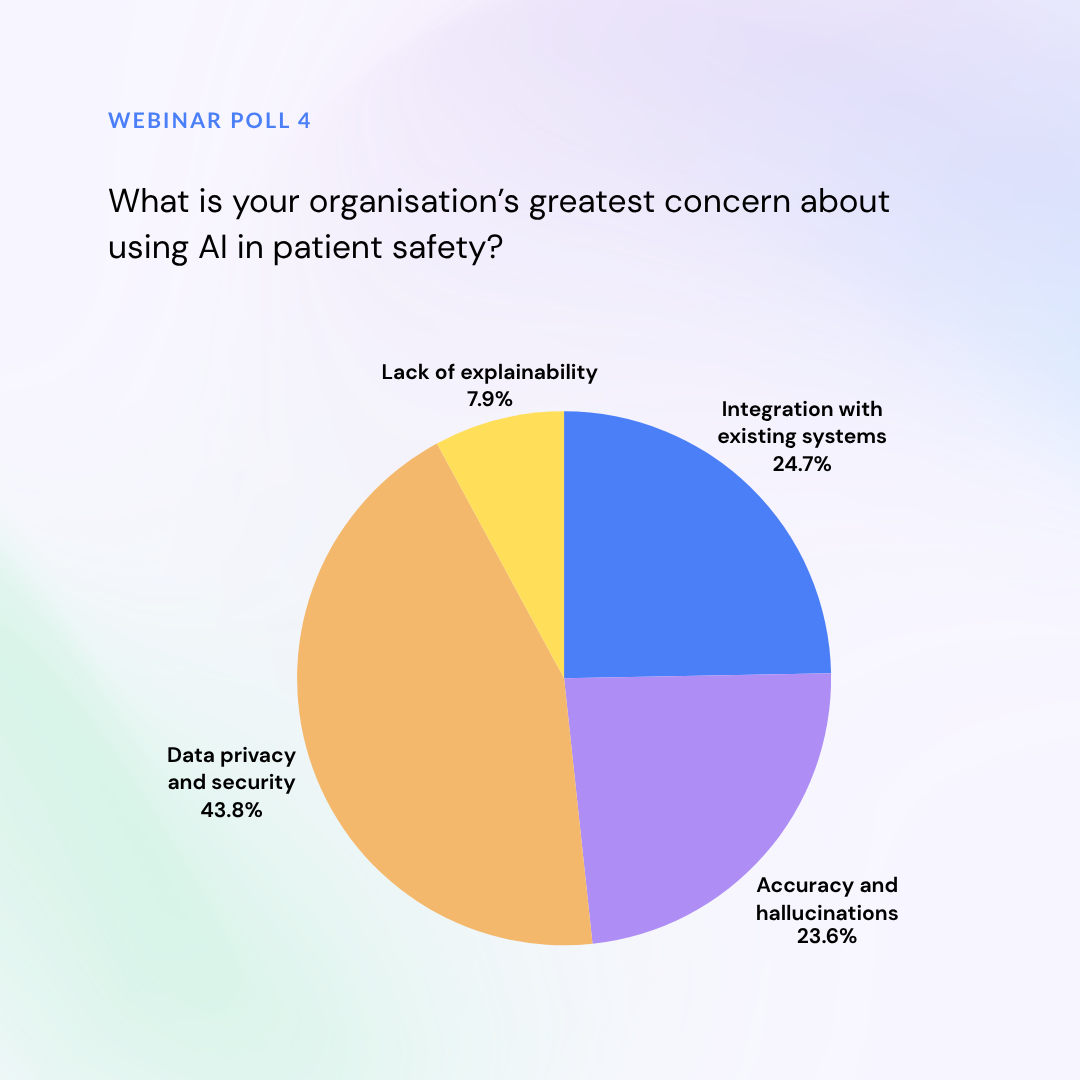
Healthcare organisations should not be expected to trust AI simply because the underlying technology is powerful. Generative AI can make mistakes and hallucinate, and patient safety is a high-stakes environment. Trust therefore needs to be built around clearly defined use cases, expected outputs, appropriate guardrails, representative testing and human oversight.
Vinoth: “Trust has to be engineered and validated.”
Validation also needs to be specific. For an AI-generated incident summary, for example, the relevant questions include whether important facts were captured, whether anything material was omitted and whether the AI introduced information that was not in the original report. The focus should be on validating the particular use case rather than relying solely on a general accuracy claim about the underlying model.
Responsible adoption also requires organisations to understand how their information is handled: where data is processed, what information reaches the model, whether it is retained or used for training, and how access is controlled. These are not purely technical decisions. Patient Safety, Quality, clinical leaders, IT, cybersecurity, privacy, risk and executive management all have roles to play in establishing appropriate boundaries and accountability.
Hak: “AI governance is ultimately a leadership and organisational responsibility.”
Responsible AI therefore needs to be designed into the workflow itself—particularly where human review is required, who can accept or override an AI recommendation, and who remains accountable for the final decision.
7. The longer-term opportunity is to recognise risk earlier
Incident management has traditionally been reactive: something happens, it is reported and investigated, corrective actions are implemented, and the incident is closed. Incident Intelligence creates the possibility of extending that process beyond retrospective analysis towards earlier recognition of risk.
This does not mean claiming that AI can reliably predict that a particular patient will experience a particular incident tomorrow. A more credible opportunity is identifying increasing frequency, recurring contributing factors or similar signals appearing across an organisation.
Vinoth: “We’re not suggesting AI can predict incidents before they happen. The more credible opportunity is early risk detection.”
A gradual increase in near misses, similar communication problems across several departments or multiple low-severity incidents involving the same workflow may appear relatively unimportant individually. Collectively, however, they may signal something that deserves attention.
Vinoth: “Individually, none may appear serious. Collectively, they may tell a very different story.”
The same thinking can be applied to corrective actions. Completing an action does not necessarily mean that the underlying risk has been reduced. Looking longitudinally at whether similar incidents and contributing factors continue to recur can provide a more meaningful view of whether an intervention is actually working.
For Quality and Risk leaders, this changes the questions that incident data can potentially help answer – from “How many incidents did we have?” towards “What risks are emerging?”, “Which problems keep recurring?”, “Where are our interventions not working?” and “Where should we intervene earlier?”
From reporting incidents to learning from them
The evolution towards Incident Intelligence should not be viewed purely as a technology journey. Technology can enable it, but organisational maturity needs to develop alongside it.
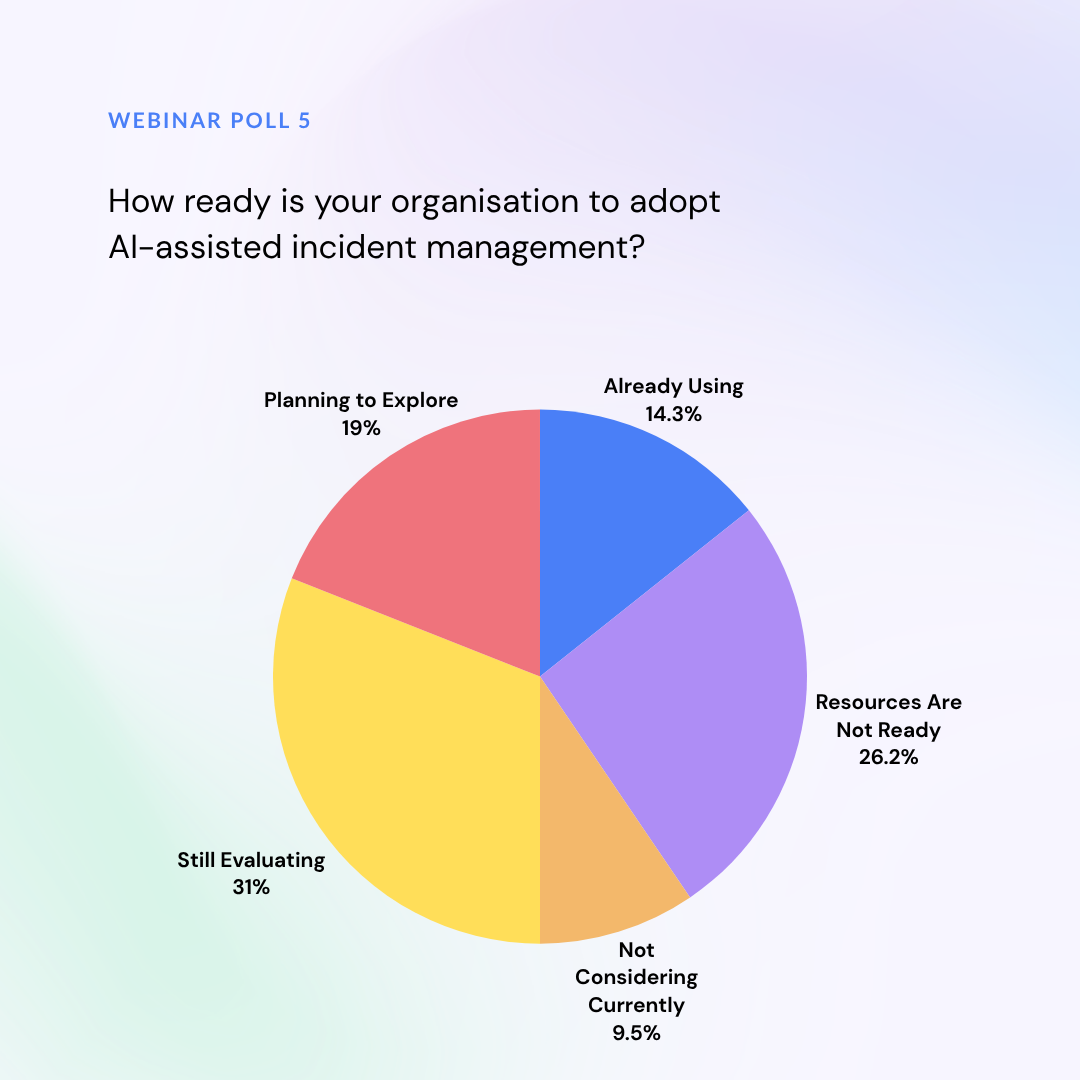
Hak describes the progression as Manual → Digital → Data Intelligence → Predictive Safety. Each stage builds on the previous one: consistent reporting supports reliable data; reliable data makes useful intelligence possible; and governance, professional expertise and a learning culture are needed to turn intelligence into action.
For healthcare leaders, the central question is therefore not whether their organisation has the latest AI technology. It is whether the organisation is becoming better at learning and responding: recognising high-risk incidents sooner, detecting recurring patterns earlier, sharing learning across the organisation, understanding whether corrective actions are reducing recurrence, and making emerging risks visible early enough to intervene.
Hak: “Are we simply collecting incident data, or are we actually learning from it?”
When healthcare organisations can connect incidents, uncover recurring patterns, recognise emerging risks and understand whether interventions are working, incident reporting becomes more than a documentation or compliance process. It becomes part of the organisation’s intelligence system for patient safety.
Hak: “The future isn’t simply about reporting more incidents. It’s about learning more from every incident we report – and using that learning to prevent the next incident.”
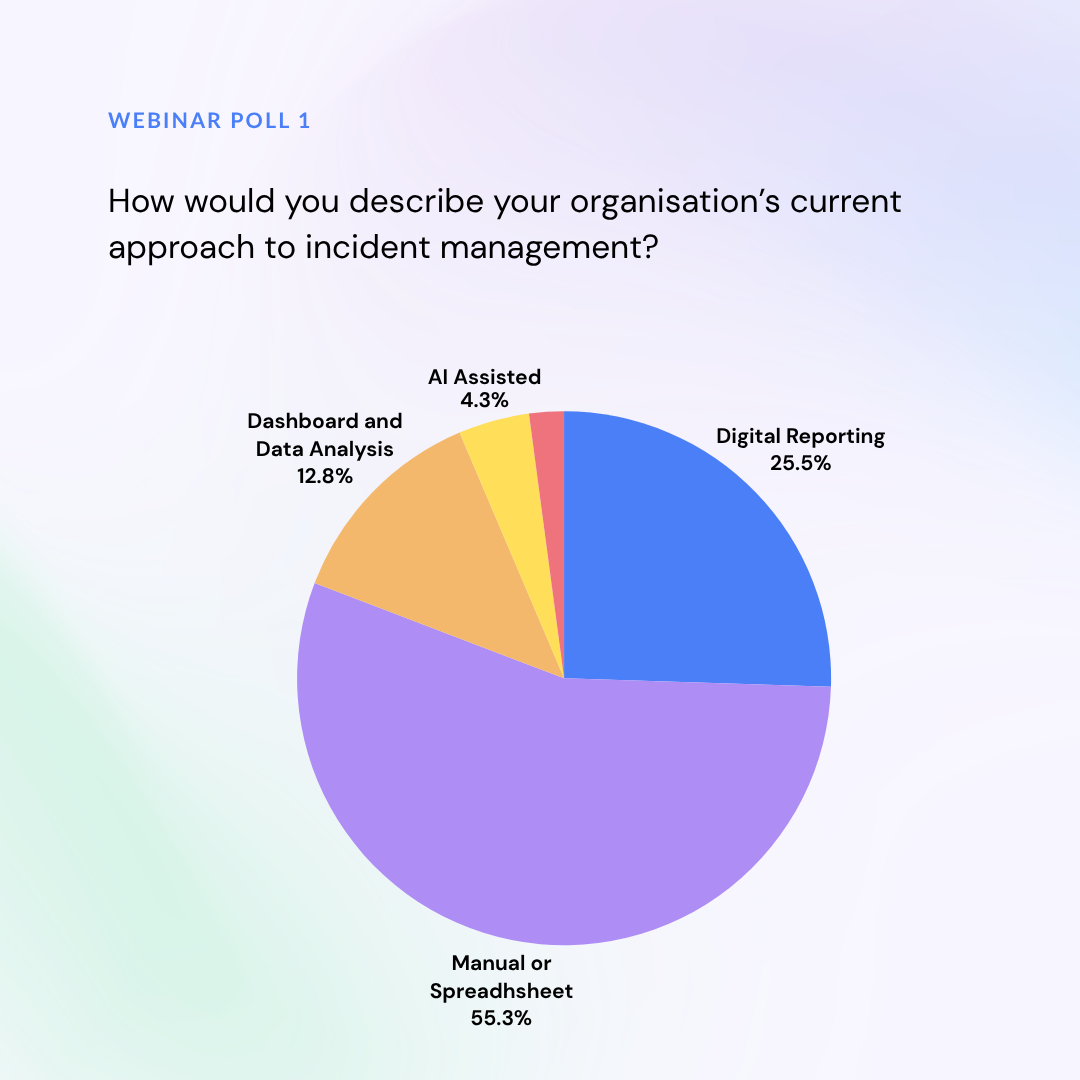
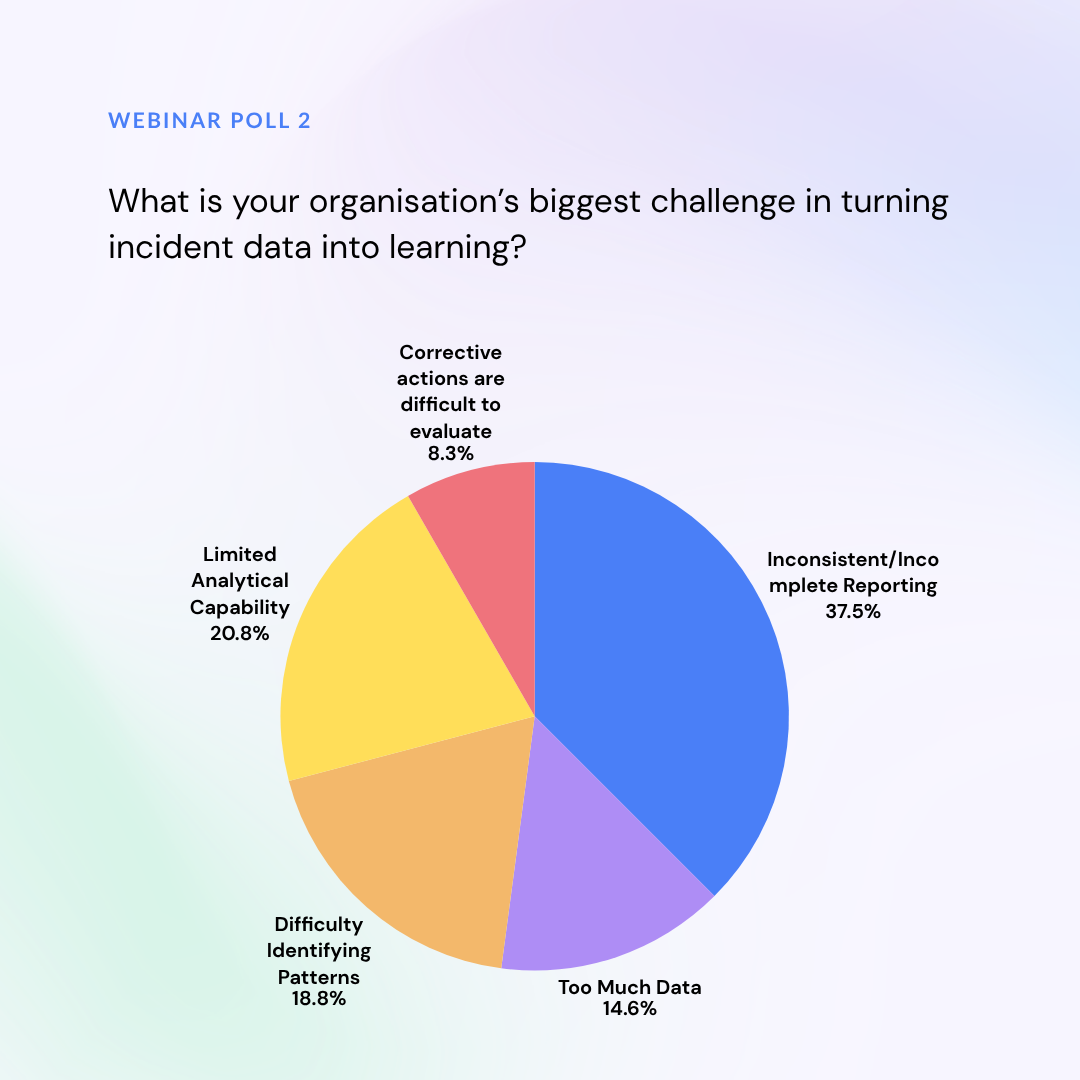
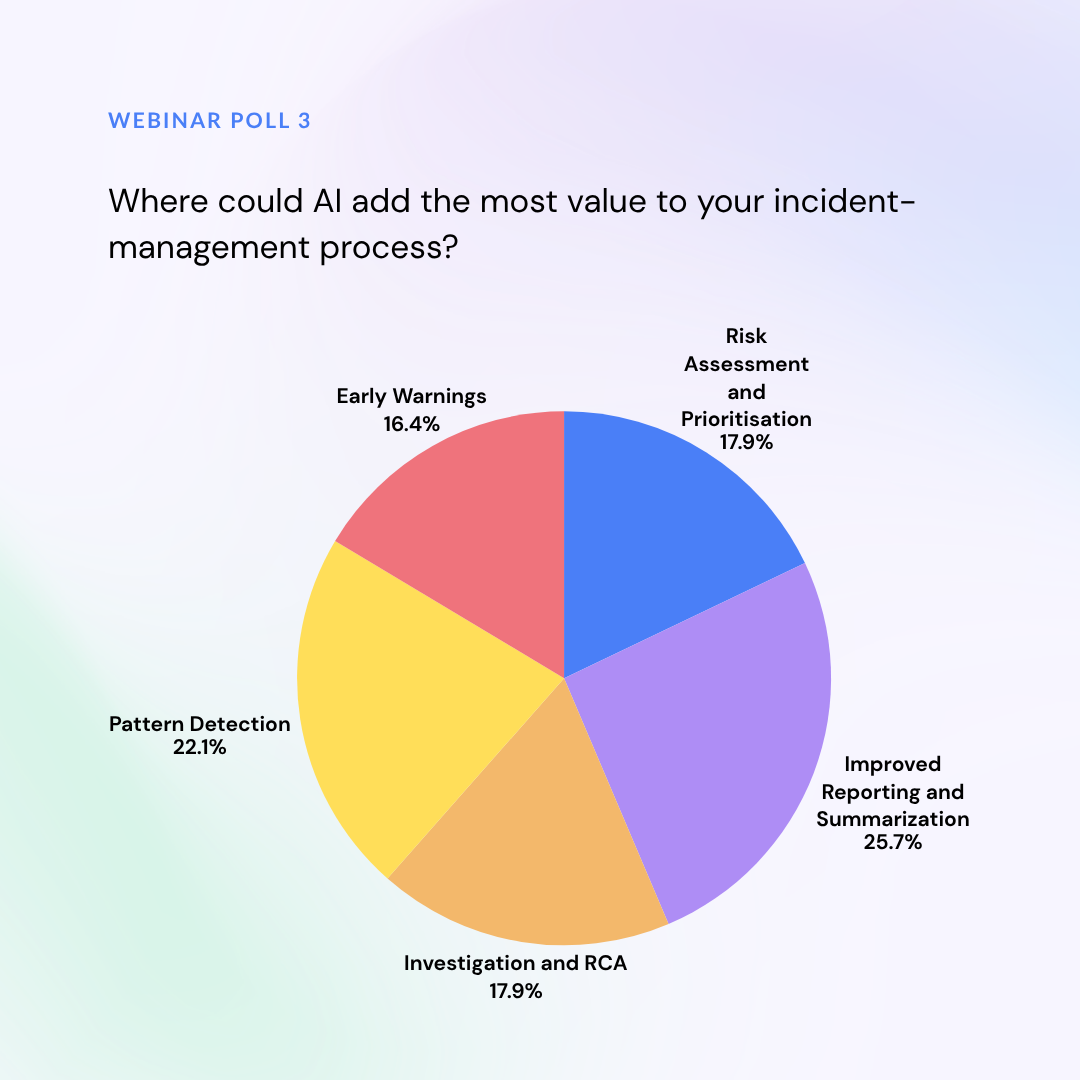
What Our Attendees Shared
Explore the Conversation
From Incident Reporting to Incident Intelligence
How AI Is Changing the Way Healthcare Organisations Understand Risk and Prevent Harm
In this conversation, Hak Yek Tan, Founder & CEO of QUASR+, and Vinoth Jayaprakasam, VP Product Engineering, explore the evolution of incident management, the role AI can play in turning incident data into actionable intelligence, the importance of responsible AI, and the longer-term opportunity to recognise risk earlier.