The Case for Modern Incident Intelligence in Aged Care
A Sector Under Pressure Across the world, aged care providers are facing unprecedented challenges. Populations are ageing rapidly, residents are […]

Artificial Intelligence is no longer a future concept in healthcare. It is rapidly becoming a strategic necessity.
Healthcare systems generate vast amounts of unstructured data every day, from incident reports and clinical notes to safety surveys and compliance documentation. Traditional systems struggle to extract meaningful insight from this data at scale.
AI changes that.
When applied responsibly, artificial intelligence enhances how healthcare organizations detect risk, analyze patterns, prioritize incidents, and accelerate learning. It transforms static reporting systems into dynamic intelligence platforms.
In patient safety and incident management, AI enables:
• Automated incident summarization
• Intelligent triage and prioritization
• Pattern recognition across thousands of reports
• Early detection of emerging risks
• Faster root cause insights
• Data driven decision support
But AI in healthcare also demands caution. Issues such as data privacy, algorithm bias, explainability, and governance must be carefully managed.
The real opportunity is not replacing human expertise. It is augmenting it.
Healthcare leaders who successfully adopt AI do not focus solely on technology. They focus on:
• Clear problem definition
• Clinical integration
• Governance frameworks
• Change management
• Measurable impact
In this section, you will explore:
• How AI is transforming incident management
• Practical applications of AI in patient safety
• Strategic considerations for implementation
• Risks and ethical considerations
• The evolving future of intelligent healthcare systems
Artificial intelligence does not improve safety on its own. Thoughtful implementation does.
For organizations seeking to move from reactive documentation to proactive prevention, AI represents one of the most powerful tools available today.
A Sector Under Pressure Across the world, aged care providers are facing unprecedented challenges. Populations are ageing rapidly, residents are […]
Transform Incident Data into Actionable Insights Healthcare organisations collect thousands of incident reports every year. Medication errors, patient falls, near
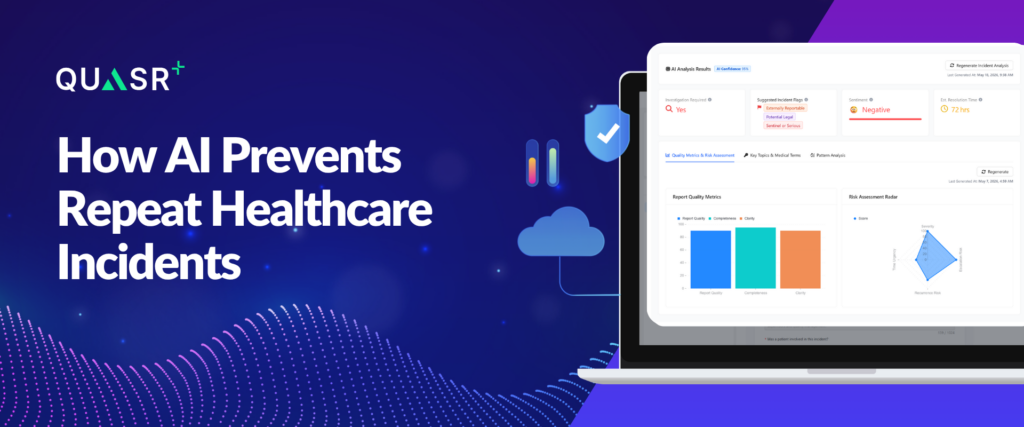
Turning safety data into actionable risk intelligence. Healthcare organisations have invested heavily in incident reporting systems, patient safety programmes, and
Healthcare organisations today face increasing pressure to improve patient safety, strengthen governance, and respond faster to emerging risks. Yet despite
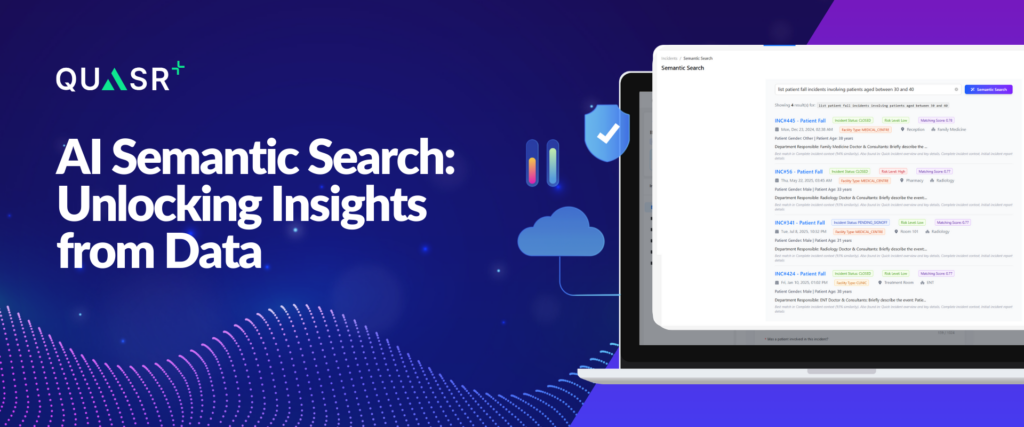
The Problem: Too Much Data, Too Little Insights Healthcare organizations generate large volumes of incident reports every year. These reports
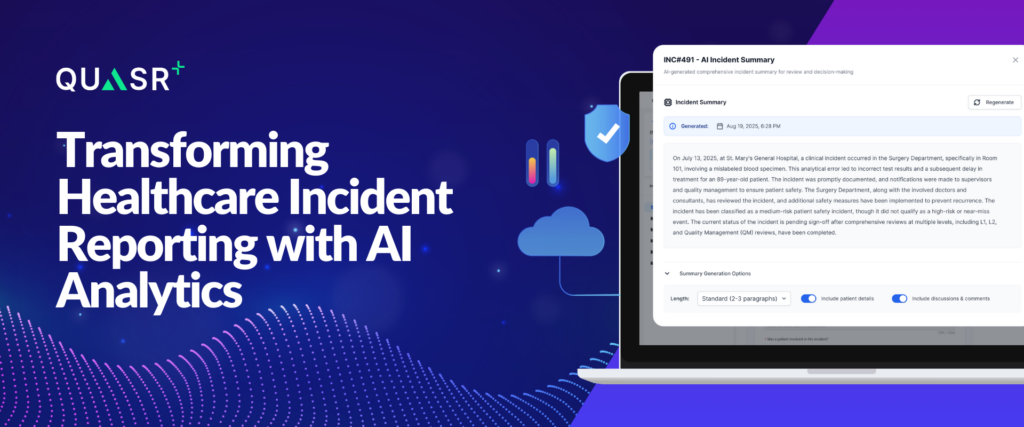
From Reporting to Prevention: Turning Safety Data into Strategic Intelligence Introduction Healthcare service providers face a common and persistent dilemma:

The Challenge: High Volume, Narrative Complexity, Limited Capacity Healthcare quality and safety teams face increasing pressure to review large volumes

Introduction Healthcare organizations generate more incident data today than ever before. Incident reporting systems capture thousands of reports annually, many
Introduction Patient safety has always been a core responsibility of healthcare. But in 2025, it has become something more: A

Transforming Healthcare Through Intelligent Technologies Machine learning and artificial intelligence are steadily transforming how healthcare delivers safe, reliable, and high-quality

Patient safety has always been healthcare’s highest mission. Yet despite decades of checklists, protocols, and audits, the numbers haven’t moved

Patient safety has always been healthcare’s non-negotiable mission. Yet despite decades of process redesigns, technological advancements and the tireless work